
Angular Internship Program
Master Angular through live projects, hands-on development, and industry-focused training. Build modern, responsive web applications, work with APIs and reusable components, and become job-ready with placement-focused mentorship.
Angular Internship
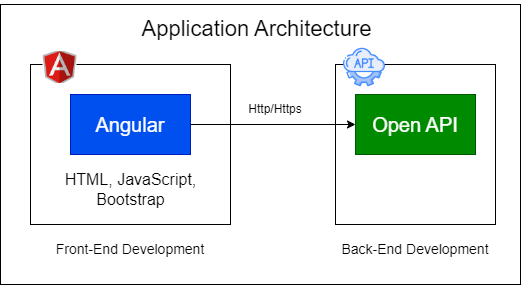
This 45-day engineering college internship program focused on building an Angular 16 project integrated with various open APIs. The program is designed to take participants from basic Angular concepts to deploying a production-ready AI-based application.
| Duration | 45 Days | Class Hours | 1 hour/day |
| Lab Hours | 1 hour/day | Prerequisite | Basic knowledge of programming |
| Certificate | After successful completion of training | Trainer | Industry Experienced Mentor |
| Study Material | Books, Notes and Online Tests | Online Test | Unlimited |
| Project | Yes | Lectures In | English / Hinglish / Hindi |
| Fees | ₹ 15,000/- + 18% GST | Placement Support | No |
| Weekend Class |
1st Saturday - 6 hours (Theory +
Practical) 2nd Saturday - 6 hours (Theory + Practical) |
Complimentary | Bag and T-Shirt |
What is the Angular Internship?
Our Angular Internship is an intensive, hands-on program that transforms you into a job-ready Angular Developer in 45 days. You’ll master Angular 16, TypeScript, and RxJS while building production-grade applications under industry-expert mentorship.
Hands-on Angular Projects
Build 5+ Angular apps integrated with REST APIs and reusable components
1-on-1 Expert Mentorship
Guided by developers with 5+ years of real industry experience
Real-Time & Secure Apps
Learn WebSocket-based real-time features, performance optimization & security practices
Industry Certificate
Recognized certification to boost your GitHub profile & LinkedIn credibility
NgRx State Management
Master centralized state management with NgRx for scalable Angular applications
Live Deployment
Deploy Angular apps on Firebase & Vercel — shareable links for your portfolio
Complete Angular Internship Syllabus
6 Modules · 5+ Weeks · 40+ Hours of Learning
-
Introduction to Angular
- Overview of Angular
- Setting up the development environment
- Introduction to Angular components
- Creating your first Angular application
-
Components & Templates
- Understanding Angular components
- Working with templates
- Data binding: Property Binding, Event Binding & Two-Way Binding
-
Angular Modules
- Introduction to Angular modules
- Organizing an Angular application with modules
- Creating feature modules
-
Project Setup & Planning
- Overview of the project and APIs to be used
- Planning and project structure
- Setting up the project repository with GitHub
-
Introduction to Open APIs
- Overview of Open APIs and their usage
- Authentication and API keys
- Making HTTP calls with Angular's HttpClient
-
Integrating First API
- Selecting the first API (e.g., OpenAI GPT-4 for chat functionality)
- Fetching data from the API
- Displaying API data in Angular components
-
Error Handling & Debugging
- Handling API errors
- Debugging Angular applications
- Using Angular DevTools
-
Styling & UI Components
- Introduction to Angular Material
- Creating reusable UI components
- Responsive design with Flexbox/Grid
-
State Management with NgRx
- Introduction to NgRx
- Setting up NgRx in an Angular project
- Managing application state with NgRx
-
Integrating a Second API
- Selecting the second API (e.g., Google Cloud Vision API for image analysis)
- Fetching and displaying image analysis results
- Combining data from multiple APIs
-
Form Handling & Validation
- Creating forms with Angular Reactive Forms
- Validating form inputs
- Submitting forms and handling responses
-
Mid-Project Review & Feedback
- Reviewing progress
- Providing feedback and addressing issues
- Planning for the next phase
-
Real-Time Data & WebSockets
- Introduction to WebSockets
- Implementing real-time data updates
- Integrating a real-time API (e.g., Twilio for messaging)
-
Performance Optimization
- Optimizing API calls
- Code splitting and lazy loading
- Profiling and performance tuning
-
Testing
- Writing unit tests with Jasmine and Karma
- Integration testing with Angular Testing Library
- End-to-end testing with Protractor or Cypress
-
Security Best Practices
- Securing API keys and sensitive data
- Implementing authentication and authorization
- Protecting against common security vulnerabilities
-
Integrating a Third API
- Selecting the third API (e.g., IBM Watson for language processing)
- Advanced data manipulation and display
- Enhancing user interactions
-
Final Features & Refinement
- Adding final features and improvements
- Code refactoring and cleanup
- Ensuring mobile responsiveness
-
Deployment Preparation
- Preparing for deployment
- Environment variables and configuration
- Setting up CI/CD pipelines
-
Deployment
- Deploying the application to a production environment (e.g., Vercel, Netlify, AWS Amplify)
- Post-deployment checks and monitoring
-
Documentation & User Guide
- Writing project documentation
- Creating a user guide and API documentation
-
Final Testing & Bug Fixing
- Conducting final tests
- Fixing remaining bugs and issues
- Ensuring application stability
-
Project Presentation Preparation
- Preparing the project presentation
- Creating slides and demo scripts
- Rehearsing the presentation
-
Project Presentation
- Presenting the project to mentors and peers
- Demonstrating key features and functionalities
- Q&A session
-
Feedback & Reflection
- Receiving feedback from mentors and peers
- Reflecting on the project and learning outcomes
- Discussing potential improvements and future work
-
Internship Wrap-Up
- Final thoughts and takeaways
- Certificates and recognition
- Networking and future opportunities
Why is an Angular Internship necessary?
- Frontend Development Mastery: Acquire advanced skills in frontend development with Angular, a powerful framework for building dynamic and robust web applications.
- Market Demand: Angular expertise is highly valued by companies worldwide, with many enterprises adopting Angular for scalable and enterprise-grade applications.
- Comprehensive Ecosystem: Benefit from a comprehensive ecosystem of tools, libraries, and resources provided by Angular and its community, enhancing productivity and development efficiency.
- Community Support: Join a vibrant community of Angular developers, offering support, documentation, and collaborative opportunities to grow your skills and network.
Whether you're aspiring to become a frontend developer or aiming to specialize in Angular development, participating in an Angular internship can significantly boost your career prospects and equip you with in-demand skills for modern web development.
Why Angular Dominates Enterprise Frontend Development
Numbers and insights that show why Angular is a powerful skill to learn today.
Angular Powers Modern Web Applications
Angular is a powerful framework for building dynamic, scalable, and maintainable web applications used across enterprise, business, and product-based environments.
Complete Framework for Frontend Development
Angular provides built-in features for routing, forms, HTTP communication, dependency injection, components, and testing, allowing developers to build complete applications within one structured ecosystem.
Rich Angular Ecosystem
Angular offers a strong ecosystem of tools, libraries, Angular CLI features, and development resources that help developers create, test, maintain, and scale modern web applications.
Trusted for Enterprise Applications
Angular's structured architecture and built-in development tools make it well suited for large-scale applications where maintainability, consistency, and long-term development are important.
Build Fast and Scalable Applications
Angular's component-based architecture, TypeScript support, dependency injection, and powerful CLI help developers build organized, scalable, and high-performance web applications.
Angular Skills Open Multiple Career Paths
Learning Angular can prepare you for roles such as Angular Developer, Frontend Developer, TypeScript Developer, UI Developer, and Full Stack Developer.
Build Real Projects During Your Internship
RaysEdTech focuses on practical Angular development through live projects, responsive UI development, API integration, TypeScript, component development, debugging, and industry-focused mentorship.
Internship Program Fee
Get Personalized Career Guidance
Our admissions team specializes in helping students choose the right career path for their goals.